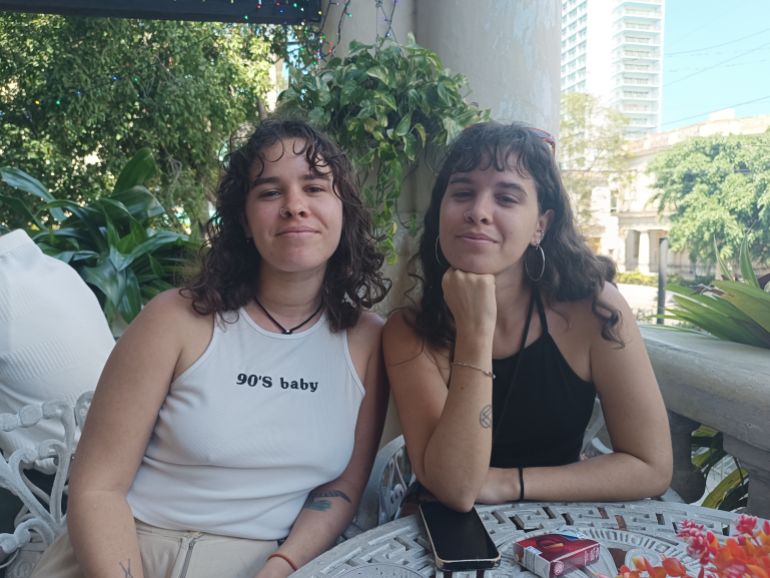
Havana, Cuba – Eight days before the President of the United States, Mr. Donald Trump, signed a document threatening tariffs on countries that supply oil to Cuba, 26-year-old twins Sandra and Sabrina Gonzalez received a devastating email.
“Due to US interests, Airbnb has to freeze some listings. Unfortunately, this applies to listing(s) in Cuba… All upcoming reservations will be canceled today,” reads the January 21 email.
“By that time, all our booking dates were closed, and all our stays from January to April were just canceled,” said Sandra, a resident of Havana.
Sandra’s family has been hosting two bed and breakfasts through Airbnb since 2016, when Cuba’s tourism industry boomed following the stabilization of relations under the administration of former US President Barack Obama. Their business survived the sanctions of Trump’s visit during his first term and the disruption caused by the COVID-19 pandemic.
After further research, the sisters discovered that only Cubans with US bank accounts linked to their records were affected.
In an attempt to resolve the situation, they tried to reach their guests directly – in violation of Airbnb’s rules – but without success.
On February 8, Cuban authorities announced that the island’s jet fuel had run out. Canadian carriers Air Canada, Air Transat and WestJet, as well as Russia’s Rossiya and Norwind, have suspended flights to the island and planned the repatriation of residents.
Canada and Russia are Cuba’s first and third sources of tourism, respectively.
Hostels, bed and breakfasts and government hotels are facing cancellations as travelers may not be able to reach Cuba or rethink their plans amid Trump’s oil embargo.
For Sandra and Sabrina, the obstacles didn’t end there. Their work as video producers was also interrupted, with the shoot being canceled for the same reason. Now, they are all considering moving to another line of work.
“Suddenly finding yourself in a situation where you have to find a job that you are not used to, with a salary that is not even half of what you made…it is difficult,” said Sandra.
Living in this situation does no one any good
The streets of Havana have changed in the last few weeks. 1950s US cars – city taxis – largely disappeared, leaving only Chinese electric tricycles struggling to meet demand.
On February 7, the Cuban government suspended fuel sales in local pesos and limited sales in US dollars to 20 liters (5.3 gallons) per vehicle, creating a long waiting list on the Cuban online booking platform.
The restrictions are part of a nationwide plan to respond to the oil embargo. This plan includes the export of motor fuel and the granting of permission to any company – including the private sector – to purchase motor fuel from the country.
Meanwhile, taxi fares, which have become the main form of transportation due to the paralysis of public transport, have risen, and black market fuel prices have risen. Petrol is already selling for the equivalent of $8 a liter (about $30 a gallon), a 400 percent increase from the week leading up to the January 3 ouster of Venezuelan President Nicolas Maduro by US forces. Venezuela provided 30% of the oil consumed by Cuba thanks to a historic arrangement where, in exchange for oil aid, the island sent thousands of Cuban doctors, nurses, teachers and other professionals to work in Venezuela.
Cuba’s last steps go beyond oil. Many civil servants were sent to remote areas, some workers were reassigned, and the work week was reduced to four days. Unnecessary surgery has been stopped, and college students have been sent home.
Cuban economist, Mr. Daniel Torralbas, says that companies that rely on fuel for motor vehicles and industries will be hit the hardest. But all businesses – private and government-run alike – are feeling the pinch.
This week the island was blacked out for 16 hours and as of Thursday, less than half of the country had power restored.
“This year will probably be one of the most difficult for the Cuban economy since the revolution,” he said.
Torralbas sees one that seems to have won in Cuba in the current crisis: “Businesses that provide solutions to the problems caused by the crisis, like those that are selling solar panels.”
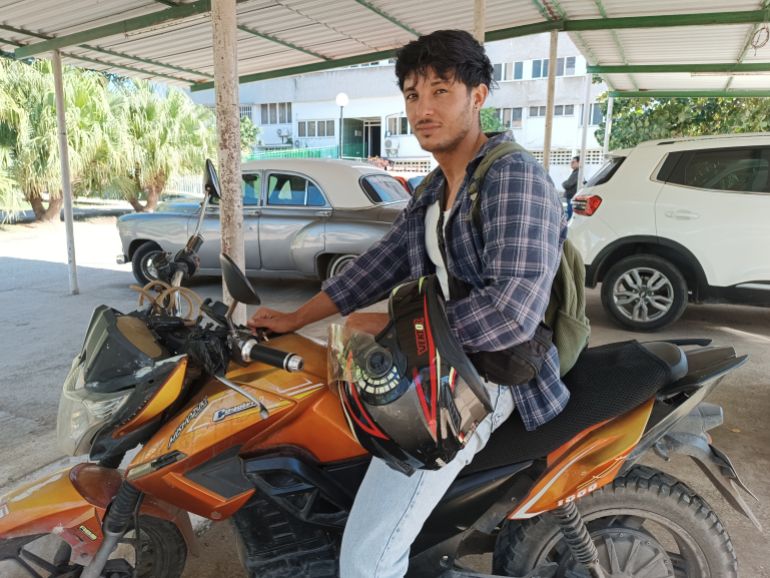
It is also helping people like 28-year-old Alejandro Candelaria. He spent the last six months working as a courier and taxi driver on an electric motorcycle his brother left him before he moved to Spain. With oil in short supply now, competition has decreased, and his income has increased.
But Candelaria does not feel defeated.
“There is no electricity, water, or gas, it affects you mentally. Of course, I benefit from the lack of oil, but living in this situation does not help anyone,” he said.
Now you can go out, but you can’t walk
On the night of February 5, shortly after Cuban President Miguel Diaz-Canel warned on television about “difficult times”, 20-year-old Rafael Mena received a WhatsApp message ordering him to leave his university immediately.
“The news caused a certain catharsis among the students,” said Mena, a journalism student, from Mayabeque, a district east of the capital, and who has been living at the University of Havana since the Cuban system allows universities to recruit students from remote or rural areas.
“The residential university was in a bad situation for many days: the electricity exchange was broken, there was no water, and added to the daily problems a person endures, it was enough to make anyone explode,” said Mena.
The next day, students began to return home, and in one week, many institutions of higher education had already closed their doors.
The government’s emergency response plan also introduced “hybrid” classrooms for high school and university studies.
Students are expected to study remotely and download materials from schools in their communities, according to official information received by Mena, who suspects that in this case, “hybrid” may be a lie.
“This whole situation feels like it’s during COVID.” Back then, we were confined to the house because going out could make us sick. Now we can go out, but you can’t walk around because it’s expensive,” Mena told Al Jazeera.
This week, the US Treasury Department said it would allow the sale of some Venezuelan oil to Cuba “for commercial and public use”. But it is not clear whether businesses will be able to pay those market prices.
Torralbas is not optimistic about the Cuban economy. The island’s GDP has fallen by 15 percent over the past five years, while indicators of life expectancy, infant mortality, education, and public health have declined. He expects that the government will be forced to take other measures to survive the consequences of the US oil embargo.
Considering the severity of the situation, there is no way to recover without change. We need oil, food, and foreign currency… and no foreign savior will come to provide everything Cuba needs — not China, not Russia, or, indeed, Venezuela, which has changed a lot since January 3.
#Cubas #economy #brink #oil #shortages #growing #austerity